Green Job Helps PEI Graduate Find Confidence — and an Unexpected Connection to Her Roots

Growing up in Murray Harbour, Prince Edward Island, Emma MacNeill became familiar with both the beauty of rural life and its limitations.
Located on the eastern end of the island, Murray Harbour is a small, close-knit community — one where connections to land and water run deep, but where access to education and employment opportunities can be limited, particularly in specialized fields like environmental conservation. Emma attended Montague Regional High School, another small community setting, where her exposure to environmental studies was brief.
“There was only one environmental-focused class at my high school,” she said. “I knew I was interested, but I didn’t really have a sense of what that could look like.”
That interest eventually led her to the University of Prince Edward Island, where she completed a degree in environmental studies with a minor in biology. But like many rural graduates, Emma soon found that translating education into meaningful, local employment was not straightforward.
“Especially when you live in a rural area, there just aren’t a lot of options,” she said.
In the fall, Emma joined the Hunter-Clyde Watershed Group as a Field Crew Supervisor through the CPRA Green Jobs Initiative, funded by the Government of Canada’s Youth Employment and Skills Strategy program.
For over 25 years, the non-profit organization has worked to restore, conserve, and enhance the Hunter River watershed through habitat restoration, monitoring, and community engagement. But while funding for summer staff can often be secured, maintaining capacity outside of that season remains a challenge.
“We often have good funding for summer staff, but it’s much harder to find support outside of that window,” said Harriet Dreise, Watershed Coordinator with the Hunter-Clyde Watershed Group. “This position allowed us to keep momentum going in the fall and actually finish projects that would have otherwise stalled.”
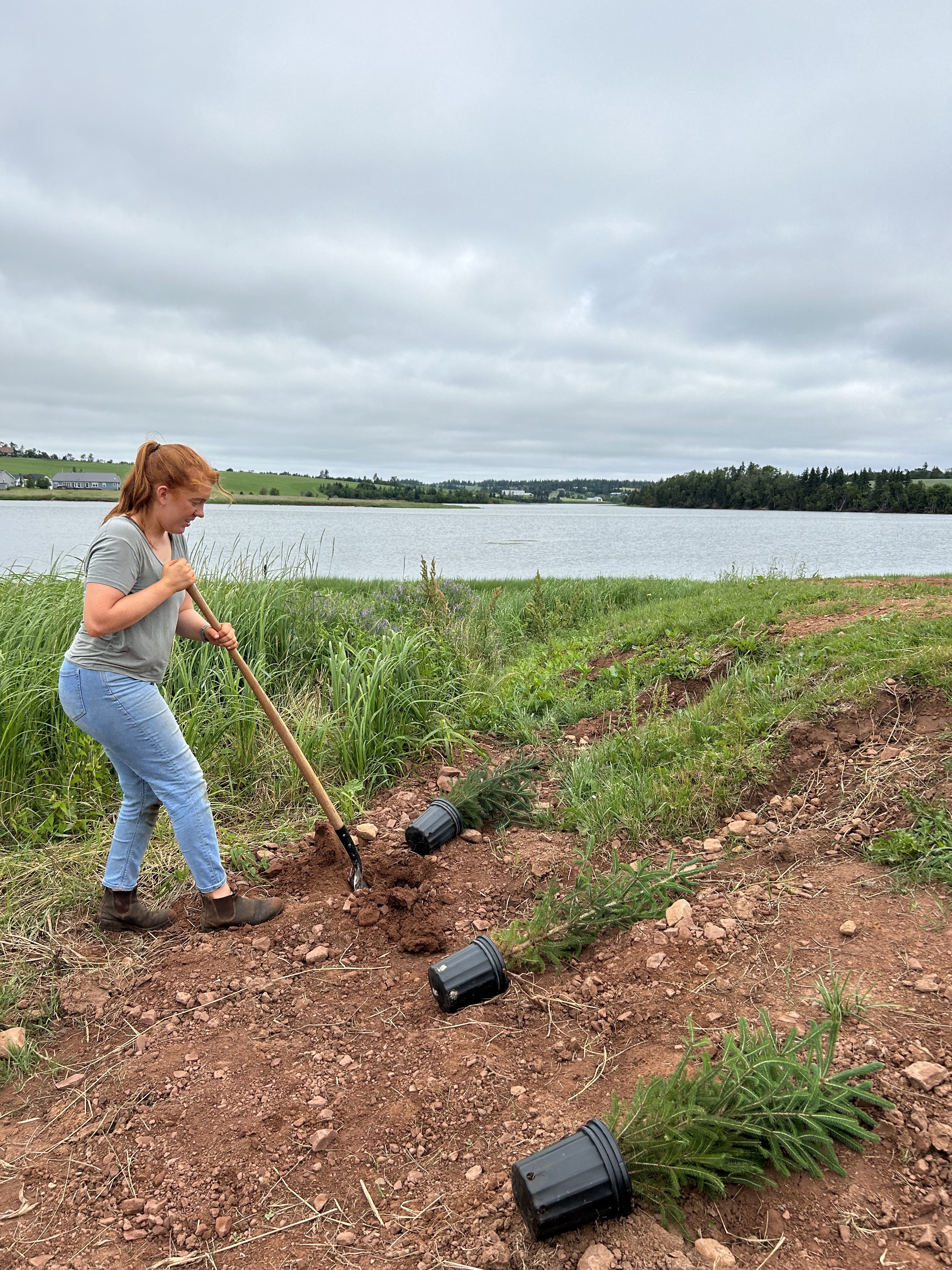
Over the course of the season, Emma became central to that work. She helped wrap up invasive species projects, completed seed collection, closed out wildlife monitoring initiatives, and played a lead role in launching a new shoreline monitoring project focused on coastal erosion. She also collaborated with Parks Canada to plan and deliver a long-anticipated tree planting event — organizing site visits, developing planting plans, coordinating volunteers, and overseeing the work itself.
But while the technical and logistical aspects of the role were demanding, some of Emma’s most meaningful growth happened in quieter ways.
Like many young people transitioning from school into the workforce, Emma struggles with anxiety — a barrier that made job applications, interviews, and early professional communication feel especially daunting.
“Coming out of school, anxiety made it difficult for me to feel confident in professional communication,” she said. “It was a real barrier when it came to applying for jobs and stepping into new roles.”
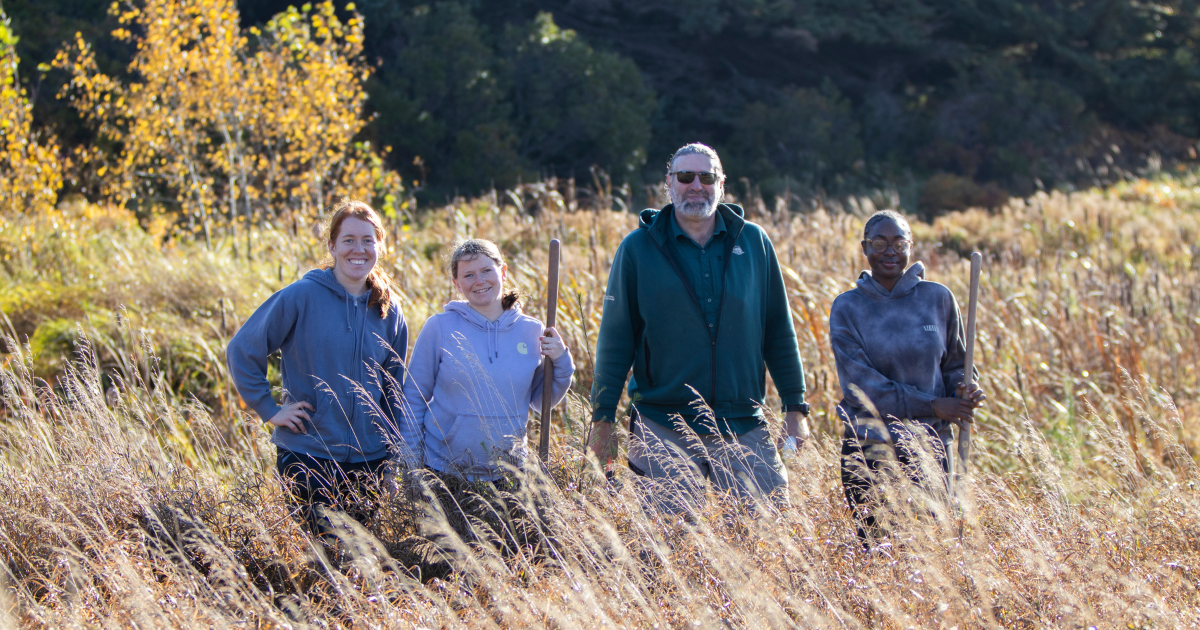
The structure of the position — along with clear expectations and strong mentorship — helped her move through that barrier rather than around it. As the season progressed, Emma found herself speaking regularly with landowners, coordinating with partner organizations, contributing ideas in board discussions, and supervising a student intern.
“Building confidence in professional communication has been a big shift for me,” she said. “It’s allowed me to step into conversations and responsibilities I would have found much more intimidating before.”
Harriet saw how that growing confidence translated into leadership.
“As the position progressed, I could see her taking ownership of her work,” Harriet said. “She grew into the leadership side of the role very quickly.”
That leadership became especially evident through her work supervising an intern. Emma was responsible for scheduling, preparing the intern for field conditions, and guiding someone who was new to hands-on environmental work.
“That experience really surprised me,” Emma said. “It helped me develop patience, clarity, and leadership skills I didn’t realize I had.”
Another unexpected discovery came through the organization’s outreach and education work.
While Emma was drawn to the role for its environmental focus, she found herself increasingly engaged by the opportunity to teach others about the watershed — through school presentations, workshops, and educational materials shared online.
“My mom was a teacher, and my grandfather was a teacher — it really runs in my family,” she said. “I never thought teaching was part of my path.”
And yet, through her work at the watershed, Emma found herself stepping into that role in her own way.
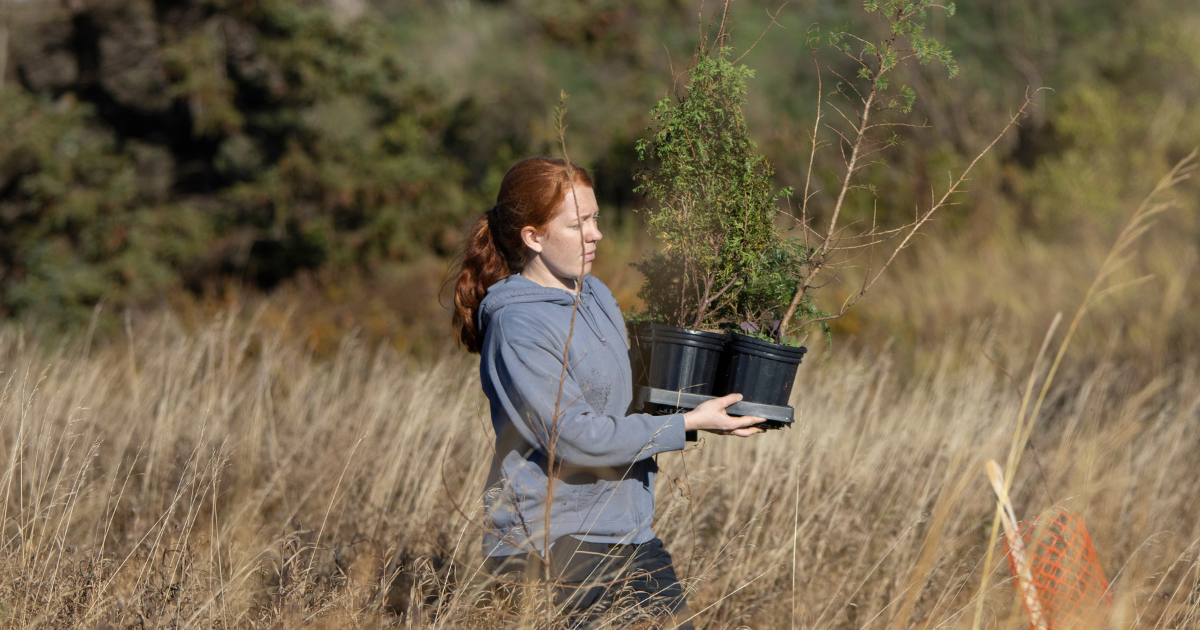
Not in a classroom, but outdoors. Not through lesson plans, but through conversations, shared experiences, and care for place.
“It really struck a chord for me,” she said. “I never thought teaching was part of my path.”
Through teaching — in the field, in conversation, and in community — Emma discovered a connection to her mother and grandfather that she hadn’t expected to carry forward. She didn’t follow their path exactly, but she found her own version of it, grounded in land, learning, and community.
In doing so, the Hunter-Clyde Watershed Group gained more than additional capacity. They gained a young professional able to bridge conservation work and community understanding — someone who could build trust, share knowledge, and help others see their role in protecting the watershed.
For Emma, the experience confirmed that she belongs in this work.
For the organization, it strengthened their ability to carry it forward.
And in a rural community where environmental stewardship depends on connection as much as expertise, that shared growth leaves a lasting impact.


