Mapping Confidence and Capacity: A Green Job Built Skills, Trust, and Direction in Penticton

When Nicole Clifford joined the City of Penticton, she was excited and a little unsure of what to expect.
“I was studying geography and anthropology, and I knew I was interested in GIS and planning,” Nicole said. “But I didn’t really know what that looked like day to day.”
Nicole was hired through the CPRA Green Jobs Initiative, funded in part by the Government of Canada’s Youth Employment and Skills Strategy (YESS).
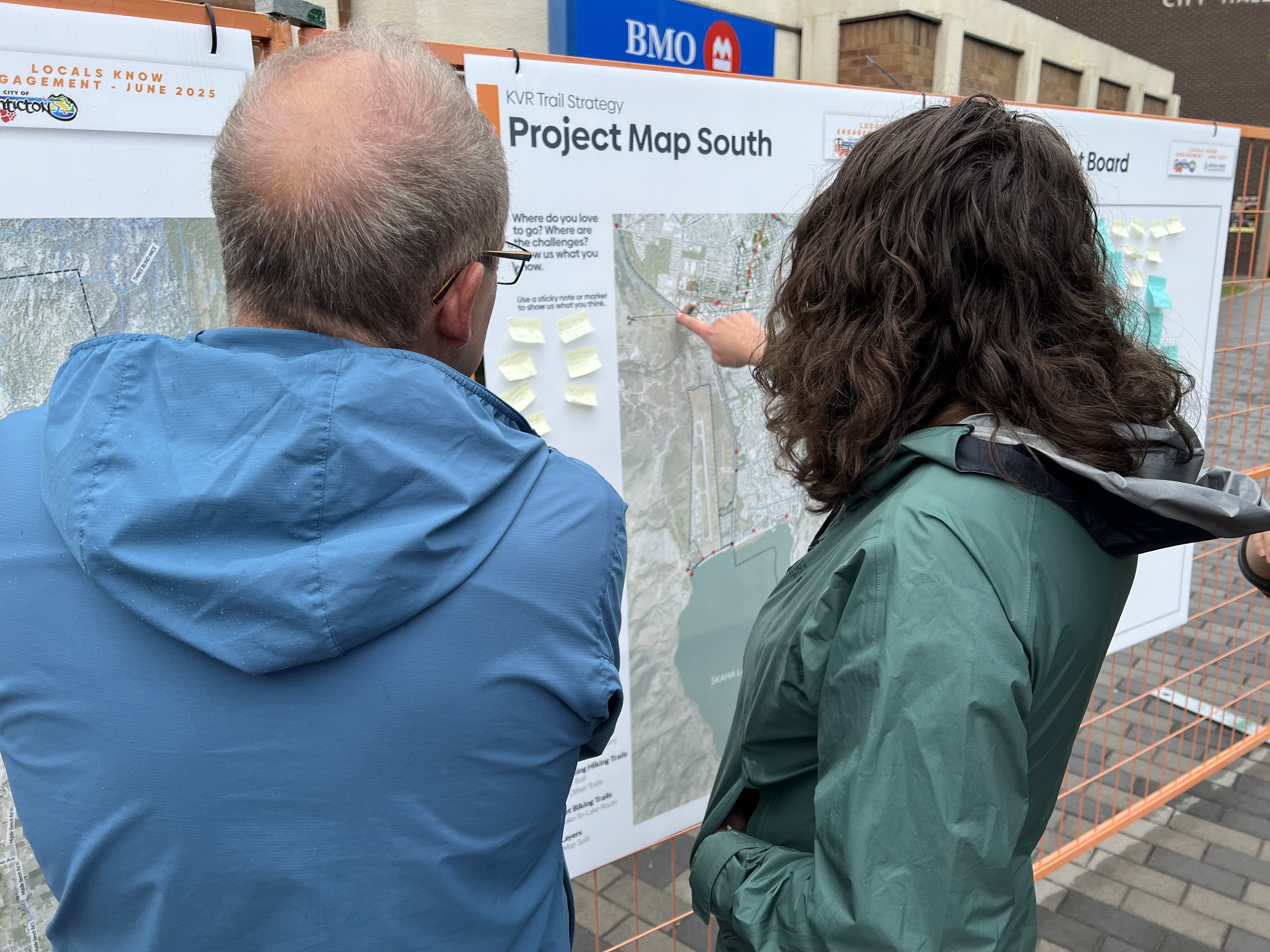
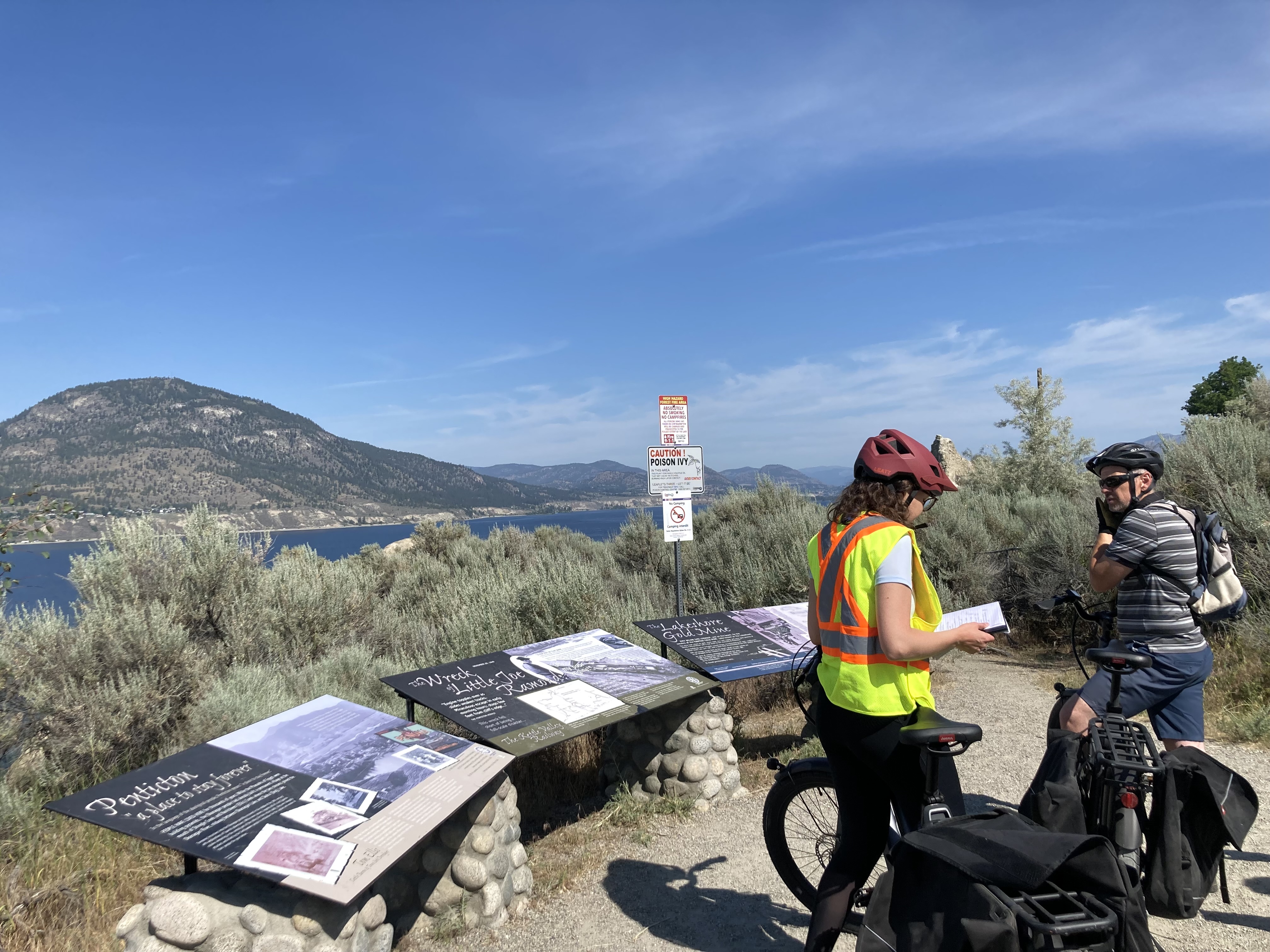
Early on, Nicole’s work focused on applying her GIS skills to refine the City’s parks GIS dataset and asset management, strengthening the information to better support day-to-day park operations. As her curiosity and confidence grew, she also contributed to the planning process for the Kettle Valley Rail Trail Strategy (KVRTS), supporting early exploratory work, documenting field observations, and assisting throughout the process. Together, these projects gave her firsthand exposure to municipal work and demonstrated how data can guide informed decisionmaking.
“It was my first time seeing how a city actually works,” Nicole said. “How information is gathered, how decisions are made, and how planning fits into everything.”
As part of her work, Nicole began using Geographic Information Systems (GIS) — a technology that helps collect, analyze, and visualize geographic data through maps and spatial tools.
“GIS can sound really technical,” she said, “but it’s basically a way to use maps and data to understand a place better and see what could be improved.”
Using GIS across her various projects helped Nicole connect classroom learning to real-world application.
“That’s when things started to click for me,” she said. “I could see how what I was learning in school could actually be used in a job.”
Nicole was supervised by Ysabel Contreras, who says the Green Jobs placement provided the City with valuable additional capacity — but what stood out most was how Nicole approached the role.
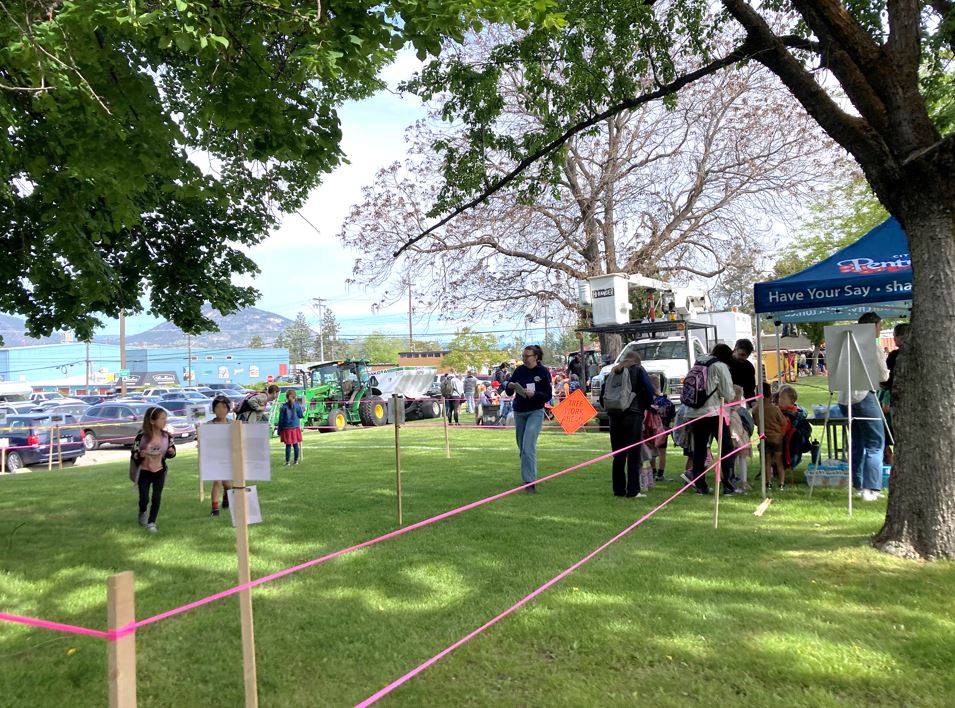
“She was curious,” Ysabel said. “She asked thoughtful questions and wanted to understand the work, not just complete tasks.”
As Nicole became more comfortable, she shared that she was interested in learning more about planning, which was not originally part of her role.
“When Nicole expressed that interest, it showed initiative,” Ysabel said. “That mattered to me.”
Rather than keeping the role narrowly defined, Ysabel supported Nicole in expanding her responsibilities.
“I didn’t want her experience to be limited to task-based work,” Ysabel said. “This program gives us the flexibility to be intentional and responsive.”
For Nicole, that response was pivotal.
“Knowing that my interests were being taken seriously made a huge difference,” she said.

As Nicole took on more responsibility and developed greater confidence in her GIS skills, she began using those skills more directly in her work on the KVR Trail Strategy.
“It combined maps, text, and observations from the trail to show different areas and what could be improved from a user perspective as well as from an operations perspective.”
The project allowed Nicole to bring together technical skills, analysis, and communication — and to contribute something tangible.
“It felt meaningful,” she said. “I could actually see the impact of the work I was doing.”
From Ysabel’s perspective, this kind of contribution highlights the value youth can bring when given space to grow.
“When young people are trusted and supported, they often introduce ideas and approaches we wouldn’t have thought of otherwise,” she said. “It creates space for learning to happen in both directions.”
For Nicole, that experience was deeply personal. Living with a learning disability, confidence has not always come easily.
“Confidence has always been something I’ve struggled with,” she said. “But Ysabel trusted me with important work, and that really helped me believe in my ability.”
Being trusted — and supported — changed how Nicole saw herself professionally.
“I felt capable,” she said. “I felt like I belonged there.”
That confidence extended beyond the placement.
“I left this position with real experience,” Nicole said. “It made me feel ready for whatever comes next.”
For Ysabel, Nicole’s experience reflects the broader value of the Green Jobs program — not just for youth, but for organizations as well.
“This program allows us to be intentional about mentorship,” she said. “It lets us move beyond assigning tasks and instead create experiences that are meaningful and mutually beneficial.”
From a youth perspective, she noted, the value lies in exposure.
“They get to see the realities of municipal work — how decisions are made, how departments collaborate, and how long-term planning connects to operations and the needs of our community,” Ysabel said. “That kind of experience is hard to get early in your career, and by providing it, the program helps participants build a deeper, more informed perspective they can carry forward into future opportunities.”
From an organizational standpoint, the value is clear.
“We benefit from creativity, fresh perspectives, and emerging skill sets,” she said. “Technology and training are constantly changing, and youth help keep us aligned with new tools and new ways of thinking.”
For Nicole, the experience helped turn uncertainty into clarity.
“It helped me understand what working for a city actually looks like,” she said. “And it helped me believe that this is something I can do.”
Programs like the CPRA Green Jobs Initiative show what’s possible when youth are trusted, supported, and encouraged to explore their interests. They create space for mentorship, build confidence where it may have been lacking, and allow young people to see themselves as capable contributors — while also giving organizations the capacity, fresh perspectives, and emerging skills needed to strengthen how they plan, adapt, and serve their communities.
For both Nicole and the City of Penticton, the impact went beyond the work completed. It was about trust built, skills developed, confidence gained, and the mutual support that benefited both sides – outcomes that continue long after the placement ends.


